

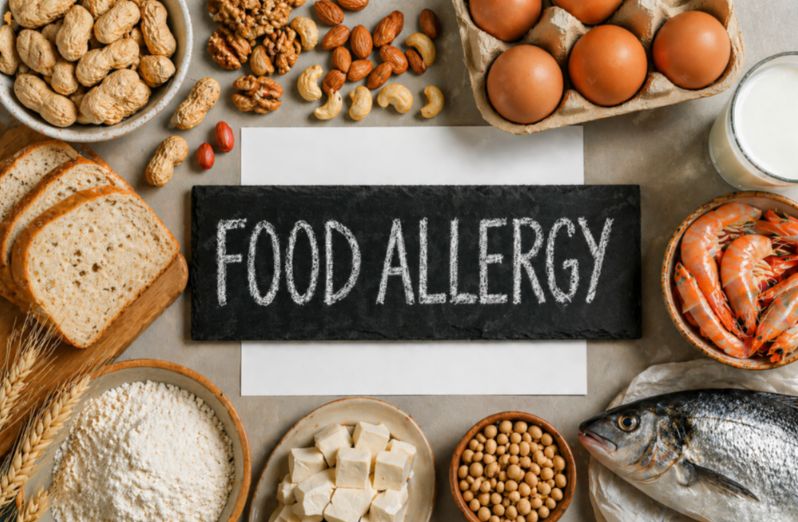
Food allergies have become a defining health issue of modern life. Once considered relatively uncommon, they now affect millions of people, especially children, and their impact extends far beyond the dinner table. A major scientific review by Scott H. Sicherer and Hugh A. Sampson highlights how our understanding of food allergies is rapidly evolving, from simple avoidance to prevention and even treatment.
An Expanding Modern Epidemic
Food allergies now affect up to 10 percent of people in some populations, with children bearing the greatest burden. The rise has been especially pronounced in industrialized nations over the past two to three decades. Why this is happening remains an open scientific question, but clues point toward modern lifestyles, cleaner environments, altered diets, and reduced microbial exposure early in life.
Not all food allergies behave the same way. Allergies to milk, egg, and wheat often fade during childhood. Others, particularly peanut and tree nut allergies, are far more persistent and can last a lifetime.
When the Immune System Misreads a Meal
At its core, a food allergy is a case of mistaken identity. The immune system, designed to defend against dangerous pathogens, instead targets harmless food proteins. In people without allergies, the immune system learns tolerance, recognizing food as safe. But in allergic individuals, the system shifts into a defensive stance, producing IgE antibodies that trigger a cascade of reactions. When the food is encountered again, immune cells release powerful chemicals that can cause symptoms ranging from itching and hives to the rapid, life-threatening collapse of anaphylaxis.
Yet this IgE-driven pathway is only part of the story. Some food-related conditions, particularly those affecting the gastrointestinal tract, arise through different immune mechanisms, highlighting the complexity of how the body interacts with what we eat.
The Diagnostic Puzzle
Diagnosing food allergies remains as much an art as a science. A detailed clinical history, what was eaten, how quickly symptoms appeared, and whether reactions are reproducible, remains the cornerstone. Laboratory tools, including skin tests and blood tests for allergen-specific antibodies, can support the diagnosis. But they come with a caveat: a positive test does not necessarily mean a true allergy. Many individuals show “sensitization” without ever experiencing symptoms.
To refine accuracy, newer methods such as component-resolved diagnostics can identify which specific proteins within a food are responsible, offering a clearer picture of risk. Still, the most definitive answer often comes from a carefully supervised oral food challenge.
Living Under Constant Vigilance
For patients and families, food allergy is not confined to the clinic, it shapes everyday life. Grocery shopping becomes an exercise in decoding ingredient labels. Dining out requires vigilance and trust. Social events can carry hidden risks. The stakes are high because the primary treatment for severe reactions, epinephrine, must be administered quickly. Yet studies show it is often delayed or not used at all, sometimes due to uncertainty or fear.
Beyond the physical risks, the psychological toll is substantial. Anxiety, social isolation, and even bullying, particularly among children, are well-documented consequences of living with food allergies.
A Radical Rethink: Prevention Through Early Exposure
Perhaps the most transformative insight in recent years is this: early exposure to certain foods may prevent allergies from developing in the first place. This idea stems from the “dual allergen exposure hypothesis,” which proposes that the route of first exposure matters. When food proteins enter through the skin, especially inflamed skin, as in eczema—they may prime the immune system toward allergy. But when introduced early through the digestive system, they can promote tolerance.
Clinical trials have confirmed this concept. Introducing peanut-containing foods in infancy, particularly for high-risk children, can dramatically reduce the likelihood of developing a peanut allergy. This finding has overturned earlier recommendations that advised delaying such foods.
From Avoidance to Active Treatment
The next frontier in food allergy is not just prevention, but treatment.Immunotherapy approaches aim to retrain the immune system by exposing it to controlled, gradually increasing amounts of an allergen. Oral immunotherapy, in which small amounts of a food are ingested daily, has shown the most robust effects, raising the threshold needed to trigger a reaction. Other approaches, such as skin patches and sublingual therapies, offer alternative pathways with different safety profiles.
Meanwhile, biologic drugs that target key immune pathways, such as IgE, are being explored as ways to make these treatments safer and more effective.
None of these therapies is a universal cure, at least not yet. But they represent a profound shift: from passive avoidance to active modification of the disease.
Toward a More Precise Future
Food allergy research is increasingly moving toward precision medicine, an approach that accounts for the unique biological and environmental factors shaping each individual’s immune system.
Scientists are investigating how the microbiome, genetics, and even early-life exposures influence whether a child develops tolerance or allergy. The hope is that one day clinicians will be able to predict, and prevent, food allergies before they ever take hold.
The Changing Narrative
Food allergies were once seen as a fixed condition, something to endure and manage indefinitely. Today, that narrative is evolving.
They are still common. Still potentially dangerous. But they are no longer as mysterious as they once were. With advances in prevention, diagnosis, and treatment, food allergies are shifting from a condition defined by avoidance to one shaped by understanding, and, increasingly, by intervention.
Reference
1. Sicherer SH, Sampson HA. Food allergy: A review and update on epidemiology, pathogenesis, diagnosis, prevention, and management. J Allergy Clin Immunol. 2018;141(1):41-58. doi:10.1016/j.jaci.2017.11.003
2. Du Toit G, Roberts G, Sayre PH, et al. Randomized trial of peanut consumption in infants at risk for peanut allergy. N Engl J Med. 2015;372(9):803-813. doi:10.1056/NEJMoa1414850
3. Togias A, Cooper SF, Acebal ML, et al. Addendum guidelines for the prevention of peanut allergy in the United States: Report of the National Institute of Allergy and Infectious Diseases-sponsored expert panel. J Allergy Clin Immunol. 2017;139(1):29-44. doi:10.1016/j.jaci.2016.10.010
4. Fleischer DM, Sicherer S, Greenhawt M, et al. Consensus communication on early peanut introduction and the prevention of peanut allergy in high-risk infants. Allergy. 2015;70(10):1193-1195. doi:10.1111/all.12687
5. Zarif A. Advances in Food Allergy Treatment. Yale J Biol Med. 2020;93(5):749-758. Published 2020 Dec 29.
